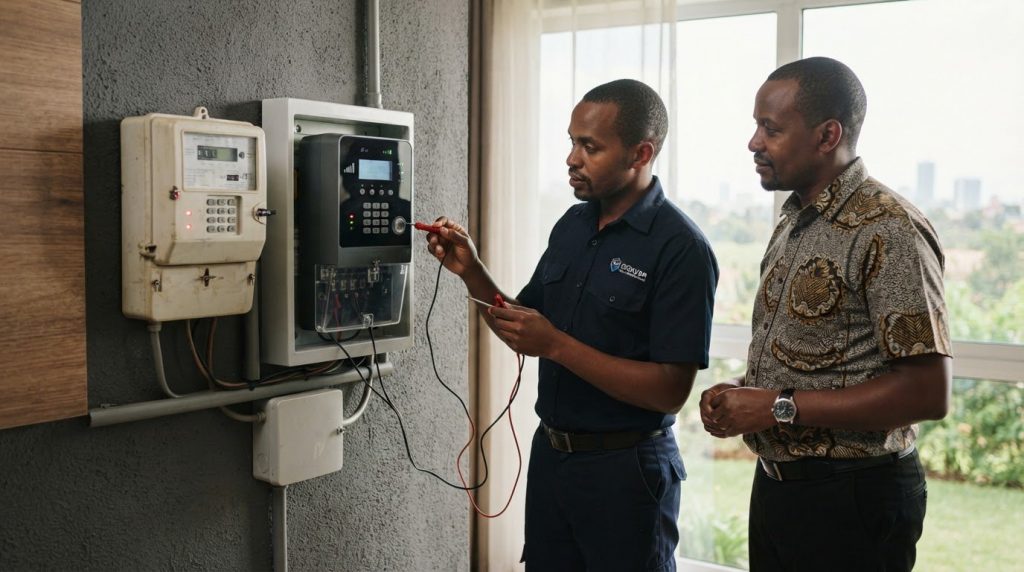
Single Phase Prepaid Electricity Meter Features to Compare
The useful comparison goes beyond prepaid versus postpaid. A single phase prepaid electricity meter measures electricity on a single-phase supply and links consumption to prepaid credit. Compare how each model displays usage, manages credit and communicates, then weigh smart features against a traditional meter’s simpler, local monitoring.
Prepayment can make electricity use easier to track, but a meter’s features determine what information and control you have day to day. A smart model may offer more than basic measurement; its practical value depends on your property’s needs and the system it must work with.
This guide explains how these meters work, what to compare and how smart models differ from traditional meters. Use it to focus on the features that matter for residential or commercial properties in Kenya, including credit management, meter visibility and operational control.
Key Takeaways
- Compare smart and traditional meters by the visibility, communication and control features that matter for your property.
- Understand what tamper and open-cover event records can show, and how those records support meter monitoring.
- Assess how prepayment affects credit management and awareness of electricity consumption.
- Learn which meter characteristics matter for a single-phase supply, including STS compliance and service connection control.
- Separate buying a meter from obtaining a utility connection by understanding the requirements relevant to prepaid electricity in Kenya.
Smart meters compared with traditional meters
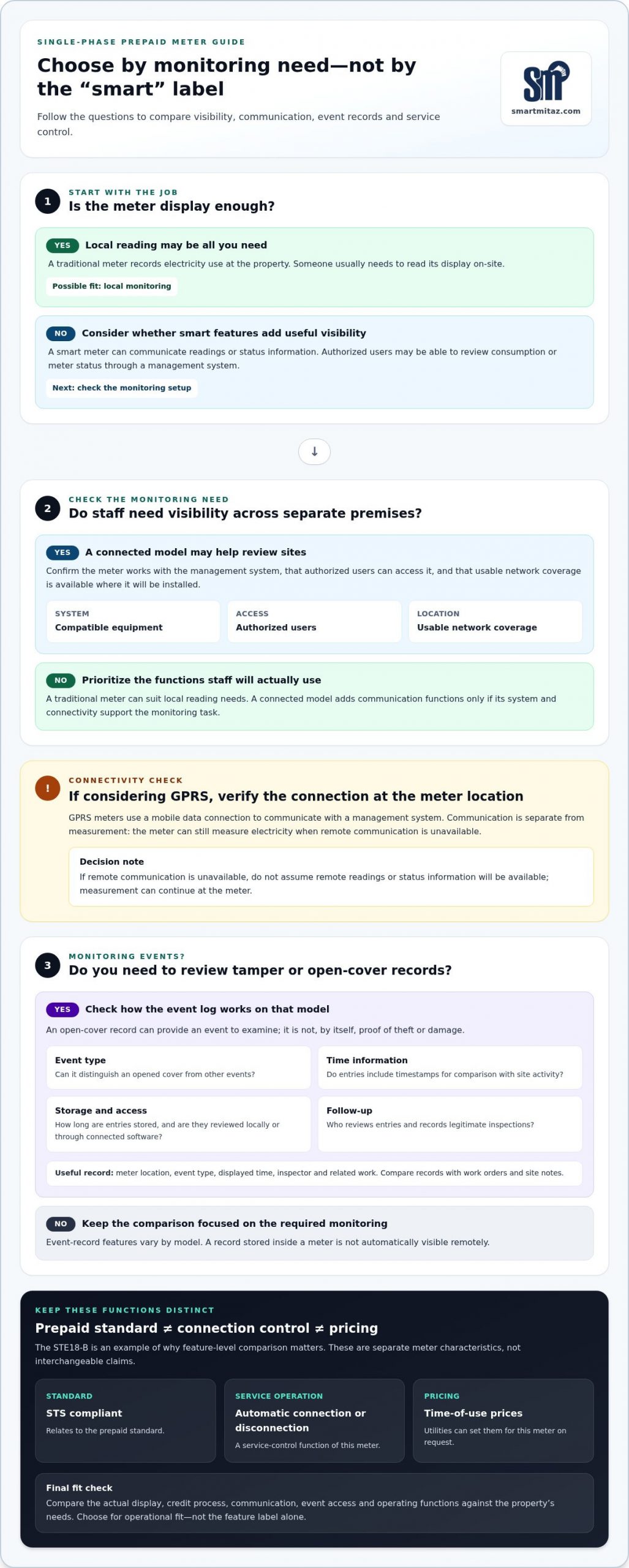
A traditional meter records electricity use at the property, while a smart meter can also communicate readings or status information. That difference matters when a landlord, facility manager or household needs visibility beyond the meter display. Compare the actual functions, not just the “smart” label. A single phase prepaid electricity meter may use token-based credit, but communication and remote management depend on the model.
Smart meter management can give authorized users access to consumption or meter status through a management system. This can help property teams review usage across separate premises and identify which meter needs attention. Traditional meters usually require someone to read the display on-site. Either way, users need to understand the display, credit process and operating instructions.
GPRS smart meters use a mobile data connection to communicate with a management system. Their usefulness depends on compatible equipment and usable network coverage where the meter is installed. GPRS communication is separate from measurement: a meter can still measure electricity when remote communication is unavailable. For a Nairobi property, consider the meter’s location and the monitoring tasks staff need to perform.
The STE18-B single-phase prepaid energy meter illustrates why feature-level comparison matters. It complies with the STS standard and automatically connects or disconnects electricity service. Utilities can set time-of-use prices for this meter on request. These functions are separate considerations: STS relates to the prepaid standard, connection control affects service operation, and time-of-use pricing concerns how consumption is priced.
To buy and enter prepaid electricity tokens in Kenya, use the electricity utility’s authorized payment channel and provide the meter number. Enter the token on the meter keypad, following the model’s prompts or instructions.
If the meter rejects a token or displays an error, check that the token matches the meter number and that you entered every digit correctly. Note the error, then use the utility’s support channel for that meter. Don’t keep entering the same rejected token.
Compare features against the job the meter needs to do. A household may prioritize clear credit information, while a property manager may value remote status access across sites. A traditional meter can suit local reading needs; a connected model adds communication functions only if its system and connectivity support them. Choose for operational fit, not the feature label alone.
Tamper and open-cover event recording
A tamper event log records activity that could affect a meter’s operation or enclosure. An open-cover event is one example: if the meter supports this feature, it detects an opened cover and stores an entry. The record gives a reviewer an event to examine instead of relying only on later assumptions.
Compare what the meter records, how it presents entries and who can access them. One model might display an event locally; another might send information to a management system. These functions vary. A record stored inside the meter isn’t automatically visible remotely, so find out how staff would retrieve it before choosing a monitoring setup.
For example, a caretaker might open an enclosure during authorized work. If the meter logs cover events, an entry could appear alongside other recorded activity. That entry is a reason to investigate, not proof of theft or damage. A reviewer can compare it with work orders, site notes and the meter’s condition.
Assess event records against your property’s monitoring process:
- Event type: Check whether the meter distinguishes an opened cover from other events.
- Time information: See whether entries include timestamps for comparison with site activity.
- Retention: Understand how the meter stores entries and manages event memory.
- Access: Identify whether users review records locally or through connected software.
- Follow-up: Decide who reviews entries and records legitimate inspections.
These details affect how useful a meter is. For a manager overseeing several Nairobi properties, remote access may help review events without visiting each meter. If records are available only on-site, staff need to visit and follow a consistent inspection process. Consider connectivity, user access and storage alongside event detection.
Keep a basic record for each meter: its location, event type, displayed time, inspector and related work. Matching an entry with a scheduled inspection can explain authorized activity without treating the record as evidence of misconduct. Don’t open a sealed or energized meter yourself. Electrical work should be handled by qualified personnel.
When comparing a single phase prepaid electricity meter, consider whether event records fit your site’s review process. A single phase prepaid electricity meter may log activity locally, while another model may offer connected access. Check how authorized users retrieve entries and use them for follow-up. For broader planning, review smart metering equipment alongside your monitoring needs.
Advantages of prepaid energy meters
Prepayment links electricity use to credit loaded onto a meter. The visible balance helps households consider their remaining credit before using high-demand appliances. For example, a resident can check the balance before using an electric cooker or water heater. The meter supports active spending awareness, but it doesn’t make electricity cheaper or guarantee lower consumption.
Credit-based use can also make budgeting more deliberate. A household can set an electricity budget, buy credit through its usual authorized channel and review how quickly the balance changes. This makes energy use a more immediate household expense. If credit falls faster than expected, residents can review appliance use or household routines rather than waiting for a later bill.
For landlords and property managers, prepaid arrangements can clarify who manages electricity credit at each premises. A tenant can monitor their meter balance, while a manager can keep account responsibilities separate between units. In a Nairobi building with separate residences, for example, clear meter identification helps residents distinguish their usage from shared-area consumption. The setup still depends on the property’s metering arrangement.
- Balance awareness: A visible credit balance helps users plan electricity use around available credit.
- Consumption feedback: Meter readings can help residents connect appliance use with changes in consumption.
- Account clarity: Separate meters can help distinguish usage between properties or occupants.
- Operational visibility: Smart models can provide management information when their communication system supports it.
These benefits depend on how people use the information. A household that checks its balance and adjusts appliance use can make more informed decisions. A property manager who records meter identifiers and occupant responsibilities can reduce confusion about which premises a reading concerns. Clear instructions matter in both cases: users need to know how to read the display, add credit and identify low-balance warnings.
Buying from an unlicensed seller risks receiving a meter that is incompatible with the intended token system, lacks reliable documentation or has no clear support route. Poor installation can also create electrical and property risks. Follow the utility’s requirements when purchasing and have qualified personnel handle installation.
Prepayment has practical limits. Users need a working way to buy and enter credit, and a depleted balance can interrupt electricity use where the meter controls supply. A household that depends on uninterrupted power should plan top-ups around its use and keep the meter’s operating instructions accessible. For a single-phase property, compare these trade-offs with the meter’s display, token compatibility and management functions before choosing a model.
Characteristics of single-phase prepaid energy meters
A single-phase meter measures electricity on a single-phase supply and applies prepaid credit to consumption. Its core functions include measuring energy, displaying information and controlling supply according to available credit. In a small home, the display can help occupants track usage locally. Depending on its design, a smart model can add communication or management functions.
Compare the display before considering extra features. Check whether it shows remaining credit, consumption information, meter status and clear error messages. A household that checks credit before using an electric cooker needs an easy-to-read balance, while a property manager may value an interface that helps identify a specific meter. The meter number and token-entry method should also be easy to find in the instructions.
Prepayment depends on compatibility between the meter and its token system. The STE18-B single-phase prepaid energy meter complies with the STS standard and automatically connects or disconnects electricity service. Utilities can set time-of-use prices for the STE18-B on request. Those functions illustrate features to compare: token standard, supply control and pricing capability.
The difference between single-phase and three-phase prepaid meters is the type of electrical supply each is designed to measure. A single-phase model suits a single-phase connection, while a three-phase model is designed for a three-phase connection. The property’s supply and intended electrical load guide the choice.
In Kenya, don’t select by brand name alone. Match the exact make and model to the electricity utility’s accepted requirements and the intended prepaid token system. A brand label by itself doesn’t establish that a particular model is suitable.
- Supply type: Match the meter to the property’s single-phase connection.
- Token compatibility: Confirm that the meter works with the intended prepaid token system.
- Standards: Look for a stated standard, such as STS, where relevant to the token arrangement.
- Control: Compare how the meter responds when available credit runs out.
- Readability: Assess whether users can understand credit, consumption and status displays.
Physical format matters too. A meter must fit the intended electrical panel and installation arrangement; a DIN-rail model, for example, is designed for DIN-rail mounting. Compare the enclosure, display position and connection layout with the site’s requirements. Qualified personnel should handle electrical connections and installation, not treat them as a consumer setup task.
Compare a single phase prepaid electricity meter by function, not by packaging claims. For a household, clear credit information and token compatibility may be priorities. For a property manager, supply type, display access and operational control may matter more. The right features depend on the connection and how occupants manage electricity.
What documents and requirements are needed to get a prepaid electricity meter in Kenya?
In Kenya, distinguish a new electricity connection from a change to the meter arrangement at an existing property. The required information depends on the request, the current supply and the utility account. Buying prepaid equipment alone doesn’t create a connection or activate a utility account. For a Nairobi property, first establish which situation applies.
For a new connection, prepare details that identify the applicant and premises. Have the applicant’s identification information, property address and evidence of authority to request work at the site. For example, a tenant should clarify their relationship to the property owner before applying. These details identify the request; the utility’s application process determines which documents it accepts.
For an existing connection, gather the account and meter details before discussing a change. Record the account holder’s name, service address and meter identifier from the equipment or bill. If a landlord manages the account, clarify who can authorize changes. A mismatch between the account holder and applicant may require further explanation before the request proceeds.
Keep technical requirements separate from paperwork. Identify whether the property has a single-phase or three-phase supply, then note the meter location and electrical panel arrangement. A single-phase site needs equipment designed for that supply; a three-phase site needs a compatible model. Qualified personnel should handle electrical work and assess the installation arrangement.
Use this preparation list to organize the request:
- Applicant details: Gather the identification information for the person making the request.
- Property details: Record the service address and a clear description of the premises.
- Account information: For an existing connection, note the account holder and meter identifier.
- Authority: Clarify whether the applicant owns, rents or manages the property.
- Supply details: Identify the phase type and existing electrical arrangement.
Organize the information to match the utility’s application. Use consistent spelling for the applicant’s name and property address. If the request concerns a rented Nairobi flat, make the roles of the tenant, owner and account holder clear. Keep copies of submitted documents and any application reference provided during the process.
For a meter replacement or prepaid conversion, explain whether the property already has an active connection and identify the account holder. For a new connection, describe the premises and requested supply instead. This distinction helps direct the request. A meter specification alone doesn’t establish utility approval, account activation or completed electrical work.
A single phase prepaid electricity meter is relevant when the property’s supply and utility arrangement suit that equipment. For a request involving a single phase prepaid electricity meter, prepare the account and site details before following the utility’s process. Keep equipment selection separate from connection and account requirements so each part of the request is clear.
Smartmitaz: Outdoor 4G-LoRa water meter gateway
smartmitaz offers an Outdoor 4G-LoRa water meter gateway for water-metering setups and a Single Phase Smart Prepayment Meter for single-phase electricity needs. These products address different monitoring requirements: choose the gateway for a water-meter system, or compare the electricity meter with your property’s supply type, token arrangement and required features.
For a three-phase connection, smartmitaz offers a Three Phase Smart Prepayment Meter. Residential properties seeking water metering can consider its Residential Smart Prepayment Water Meter. Match the product category to the utility being measured and the site’s intended setup. The gateway is not an electricity meter, and metering equipment does not provide electricity or water utility service.
Contact smartmitaz to discuss its metering products or visit smartmitaz.com.
Choose a Meter That Fits Your Next Operating Step
Use your meter decision to guide property monitoring. A single phase prepaid electricity meter should match the supply and the way occupants or managers need to manage electricity credit. Keep the intended use in mind when comparing equipment so the selected meter meets the site’s actual requirements.
smartmitaz offers a Single Phase Smart Prepayment Meter and a Three Phase Smart Prepayment Meter for electricity metering needs. Its Outdoor 4G-LoRa water meter gateway serves a different purpose, supporting water-metering setups. These categories help separate electricity metering from water-meter monitoring when planning equipment for a property.
Move from comparison to a product discussion with your site’s supply type and monitoring priorities in mind. Contact smartmitaz for meter advice and identify the metering category relevant to your property. A focused next step makes it easier to align equipment choices with practical operating needs.
Frequently Asked Questions
What is a single-phase prepaid electricity meter and how does it work?
A single phase prepaid electricity meter measures energy on a single-phase connection and deducts consumption from prepaid credit. In a Nairobi home, for example, a kettle and cooker draw electricity through the same meter, and the balance changes as energy is used. The display helps occupants monitor that balance. Controls and token arrangements depend on the model and applicable utility setup.
[…] two dimensions: how prepaid credit is managed and how the meter is configured for the property. A conventional prepaid meter may support a prepaid workflow without remote communications. A smart-enabled model may add […]