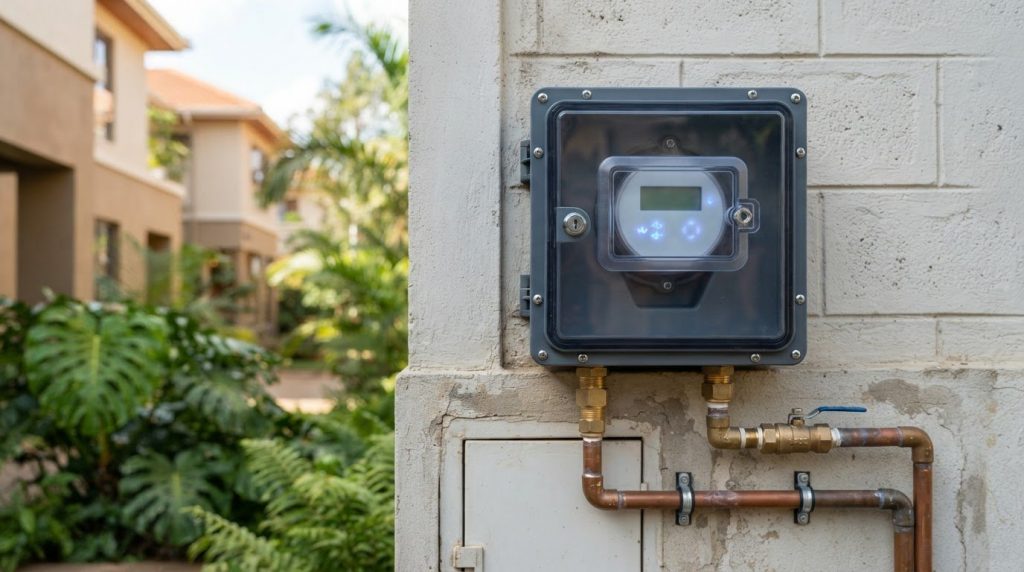
Residential prepaid water meter setup and security for Nairobi homes
Choose a residential prepaid water meter if you want to manage water spending with prepaid credit rather than relying only on a later bill. For Nairobi homes, this can make top-ups easier to plan and household water use easier to monitor. It can suit residents and property managers who want more control over water budgeting.
Prepayment is only one part of a reliable setup. Installation planning, meter security, routine care and clear after-sales support all affect how well the system fits a home. This guide explains what to consider at each stage, including how household layout and access to the meter can shape installation and security decisions. You’ll also learn what maintenance involves and what support matters after setup, so you can assess whether prepaid metering fits your property and manage the transition with practical expectations.
Key Takeaways
- Prepaid metering helps households manage water credit and make usage easier to monitor. Learn what to consider before choosing this payment approach.
- Plan the meter location and setup around the property’s pipework, access needs and household layout.
- Protect the meter from unauthorised access and build routine checks into property maintenance.
- Explore smartmitaz’s Residential Smart Prepayment Water Meter and Outdoor 4G-LoRa water meter gateway to identify hardware options for a home setup.
After-sales support and maintenance
After setup, keep the commissioning record with the property’s water documents. Note the meter location, account or meter identifier, initial reading and handover instructions. For a residential prepaid water meter, these details help residents identify the correct unit when reporting a fault. They also give a caretaker a clear starting point when tenants change.
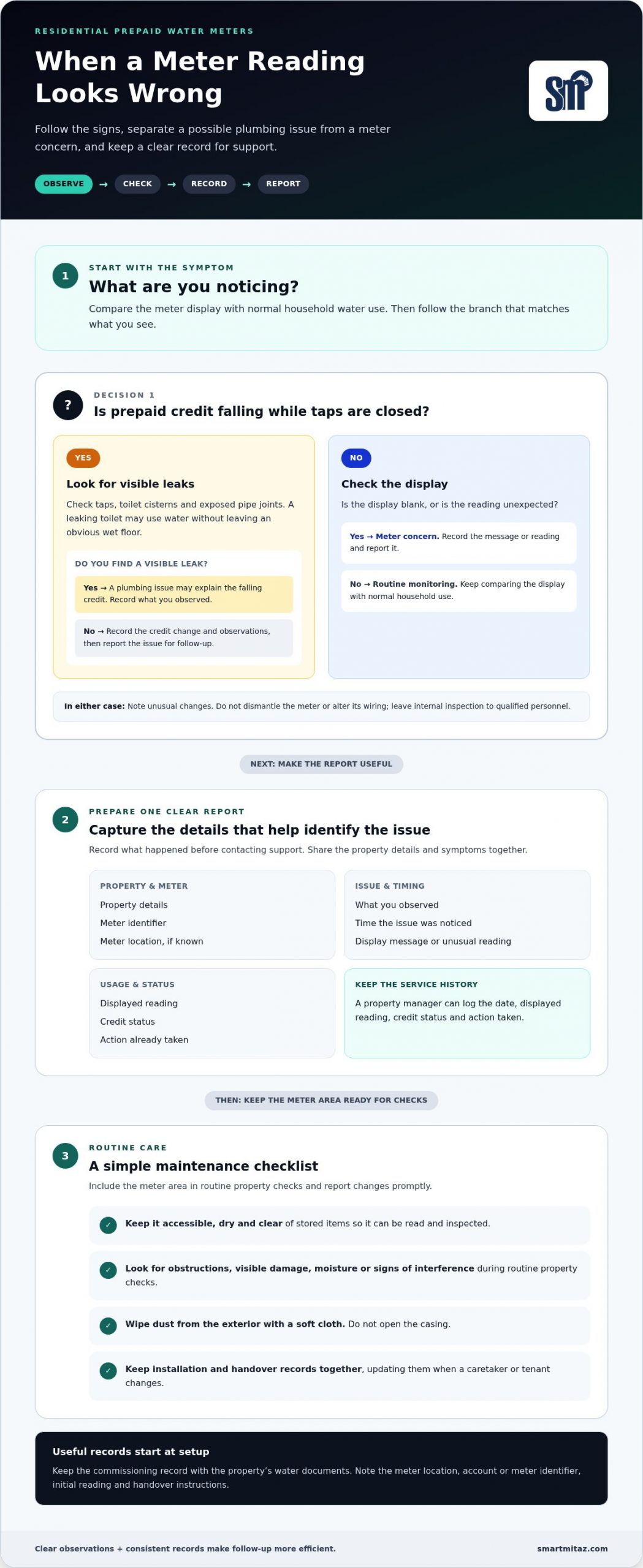
Check the meter regularly rather than waiting for a problem. Compare its display with normal household water use and note unusual changes. If credit falls while taps are closed, look for visible leaks at taps, toilet cisterns and exposed pipe joints. A leaking toilet may use water without leaving an obvious wet floor.
- Keep the meter area accessible, dry, and clear of stored items.
- Wipe dust from the exterior with a soft cloth; don’t open the casing.
- Record display messages or unusual readings before contacting support.
- Share the meter identifier, issue, and time noticed in one clear report.
Distinguish a possible plumbing issue from a meter concern. For example, falling prepaid credit alongside a dripping kitchen tap may point to a leak. A blank display or unexpected reading needs a different report. Don’t dismantle the meter or alter its wiring. Record what you observed and leave internal inspection to qualified personnel.
After-sales support is most useful when your report includes the property details and symptoms. Keep installation and handover records together, updating them when a caretaker or tenant changes. A property manager can log the date, displayed reading, credit status and action taken. This creates a service history without relying on memory.
For planned maintenance, assign someone to inspect the meter area during routine property checks. They can look for obstructions, visible damage, moisture or signs of interference. Report changes promptly and keep the meter accessible for inspection. Consistent records make follow-up more efficient and help distinguish a recurring issue from a new household leak.
Why Choose Prepaid Water Meters?
A residential prepaid water meter connects water use to prepaid credit. The meter records flow through the connected pipe and deducts usage from the available balance. Residents can add credit in advance and monitor the displayed balance. This changes when payment is made and makes water spending easier to track.
For households, a key benefit is budget control. Tenants can see credit fall as water is used, while property managers can assign costs to a specific unit. Prepayment can also help flag unusual consumption. A sudden balance drop is a reason to check for a running toilet or leaking tap.
In Kenya, applicable consumer protections depend on the water supplier, meter ownership and service arrangement. Keep transaction records, understand how credit and charges appear, and use the relevant complaint process if readings or deductions seem incorrect. These steps support transparency without assuming the same rules apply to every setup.
Installation costs vary between Nairobi homes. The total depends on the meter selected, any pipework changes, access to the connection and commissioning work. Before agreeing to a setup, request an itemised breakdown of the hardware and any required plumbing work.
Water tariffs and service charges depend on the supplying utility and the property’s arrangement. Check how the account applies consumption charges, fixed charges and prepaid credit. This helps you compare the displayed balance with actual use.
Which Kenyan utilities offer prepaid residential meters? Availability depends on the utility and service arrangement for the property. A privately managed apartment meter does not, by itself, mean the supplying utility offers prepaid billing.
- Review displayed credit and record top-ups.
- Compare usage with household routines.
- Investigate unexpected deductions for leaks or reading issues.
Installation and setup
Start by mapping the water supply at your Nairobi property. Identify the incoming pipe, existing meter, shut-off valve and branches serving separate units. In a maisonette, for example, confirm whether one connection supplies both floors. The meter location should match the household or unit being billed. Get the property owner’s or manager’s approval before work begins.
Next, inspect the pipework and access. A clear, reachable location makes readings and future checks easier. Note nearby walls, cabinets, drainage and signs of leakage. Include any necessary pipework changes in the installation plan, and keep the meter accessible after boxing or finishing work.
- Record the property address and the unit the meter will serve.
- Trace the relevant water line from its supply point.
- Check pipe condition, fittings, access, and existing shut-off points.
- Fit the meter in line with the intended connection and flow direction.
- Restore the supply and inspect joints for visible leakage.
Commissioning should establish a clear starting point. Record the meter identifier, displayed reading and initial credit status. Open a tap and confirm that the display responds to water use. Close the tap and check that the reading stops changing. This simple test can reveal an installation or plumbing issue before normal household use.
For a rental flat, give the tenant or caretaker the meter location and operating instructions. Keep the handover record with the property’s water documents. For a shared connection, clarify which rooms or units the meter covers. These details reduce confusion when residents compare consumption or report an issue.
Plan the setup around the actual pipe route, not an assumed standard layout. A ground-floor apartment and a standalone house may need different access arrangements. Keep the meter visible, protect it from accidental knocks and leave the surrounding area clear. This makes it easier to read and inspect.
Meter security and tamper prevention
Place the meter where residents can read it but casual visitors cannot handle it. In a Nairobi apartment block, a locked service cupboard can limit access while keeping the display available to the caretaker. Don’t hide the unit behind stored items or permanent fixtures. Restricted access helps prevent accidental knocks and unauthorised handling.
Protect the meter and pipe connections from routine damage. Keep cleaning tools, buckets and heavy objects away from exposed fittings. If the meter is outdoors, inspect the area after heavy rain or nearby maintenance. Note moisture, shifted pipes, cracked covers or disturbed fittings to help identify changes early.
- Record the meter identifier and starting reading in property files.
- Limit access to named residents, caretakers, or property managers.
- Photograph visible damage before anyone moves or repairs nearby items.
- Keep the display and shut-off access clear for inspection.
Look for changes, not only obvious breakage. A scratched cover, loose connection, damaged seal or reading that differs from normal household use deserves attention. Compare the display with the previous property log. For example, a sudden change after plumbing work may warrant a closer look at the meter area and connected pipes.
Don’t open the casing, alter wiring, remove seals or reposition the meter. These actions can damage equipment and make later fault assessment harder. If a resident suspects interference, record the date, location, display reading and visible condition. Keep the details factual, and avoid accusing a tenant or neighbour without evidence.
For shared housing, assign a caretaker to check the meter area during normal property rounds. Keep access controlled, but don’t obstruct reading or inspection. Review practical water meter security options when planning a setup for a home or apartment building.
Smartmitaz: Outdoor 4G-LoRa water meter gateway
smartmitaz offers the Outdoor 4G-LoRa water meter gateway for properties considering water-metering hardware. It sits alongside the Residential Smart Prepayment Water Meter in the company’s product range. For a Nairobi home or managed residential property, these named options help distinguish the meter from the gateway when planning a system. Choose based on the equipment your property needs, rather than assuming the gateway replaces the meter. Learn how a water meter with LoRa connectivity sends readings to a gateway and supports remote monitoring.
smartmitaz also offers Single Phase and Three Phase Smart Prepayment Meters. These are electricity-meter products, not water supply services. Match the product category to the utility being measured and the property’s setup. Clear product selection helps make discussions about residential prepaid water meter hardware more focused.
For prepaid water-meter hardware, contact smartmitaz or visit smartmitaz.com.
Set Up a Clear Next Step
Make the metering decision part of your property’s operating plan. Before adopting a residential prepaid water meter, agree who manages household credit, who can access the meter and how residents should report a concern. Clear roles help landlords, tenants and caretakers follow the same process, particularly when occupancy changes.
Keep the decision practical. Match the metering approach to the property’s water arrangement and the people responsible for day-to-day use. Then document the responsibilities in a simple handover note. This gives incoming residents a clear starting point and helps property managers maintain consistent procedures without relying on informal instructions.
For a product discussion based on your property’s metering needs, contact smartmitaz about your meter. Take the next step with a defined plan and a setup that fits how your Nairobi home is managed.
Frequently Asked Questions
What is a residential prepaid water meter and how does it work?
A residential prepaid water meter measures water use and deducts it from credit added in advance. The display or monitoring system helps residents follow the balance. For example, a household can compare credit use during a week with visitors against its usual pattern. The meter records consumption; the property’s billing arrangement determines how credit and charges are managed.
What are the application and installation requirements for a prepaid water meter in Kenya?
Requirements depend on who supplies water and manages the property connection. Identify the account holder, the pipe serving the home and whether the utility or property manager must approve a change. In a Nairobi rental, coordinate access with the landlord or caretaker. Keep the meter accessible and document which unit it serves before work starts.
How do residents buy prepaid water tokens and top up a meter in Kenya?
Token purchase and delivery depend on the metering arrangement. In Smart Mitaz’s setup, tenants purchase tokens delivered by SMS, and automatic recharge also applies to its smart prepaid meters. Payment methods include M-PESA, credit or debit cards, and online banking. Follow the account instructions and retain the transaction message for reference.
How can users check their prepaid water balance and monitor consumption?
Use the meter display or the monitoring tools connected to the account, then compare readings over time. Smart Mitaz’s smart prepaid metering solutions include real-time monitoring and remote meter reading. A useful household practice is to note the balance before being away, then compare it on your return. Unexpected changes can help focus checks on particular fixtures or supply lines.
How does a prepaid water meter compare with a conventional postpaid meter?
Prepaid metering applies credit before water use, while postpaid billing charges for consumption after the billing period. Prepayment helps residents track available credit as they use water. Postpaid arrangements may suit households that prefer a later bill. For a shared Nairobi property, compare who controls top-ups, how costs are allocated and how residents receive usage information before choosing an arrangement.
What happens when prepaid water credit runs out, and how quickly is service restored after a top-up?
When credit runs out, the meter’s configured operating rules determine what happens to water access. Restoration time varies by setup. After a top-up, the system must receive and apply the credit before the balance updates. Keep the transaction confirmation and follow the account instructions if the displayed balance does not change.