Prepaid Meter: How to Choose for Remote Management
A prepaid meter should match the property’s electricity or water use, the required meter type, and the level of remote management needed. To decide how to choose a prepaid meter, compare its prepaid functions with its communication options and the site’s connectivity. When electricity credit runs out, supply may disconnect, so clear balance information and a straightforward recharge process matter.
Paying before use makes consumption and available credit easier to track, while smart functions can add remote reading and monitoring. This guide explains how prepaid meters work, what to consider when credit runs out, and how connected features can support usage management. Prepaid and smart aren’t opposing choices: some meters combine both, so match the functions to the property and the people managing it.
Key Takeaways
- Choose a meter that fits the property’s utility, electrical setup, and payment process so credit management remains practical.
- Understand what happens when prepaid credit runs out, and why balance visibility and easy recharging matter.
- Match communication options to site connectivity and management needs to support remote monitoring and control.
- Explore combined prepaid and smart features, including smartmitaz’s meter options and Outdoor 4G-LoRa water meter gateway.
Automatic disconnection when credit runs out
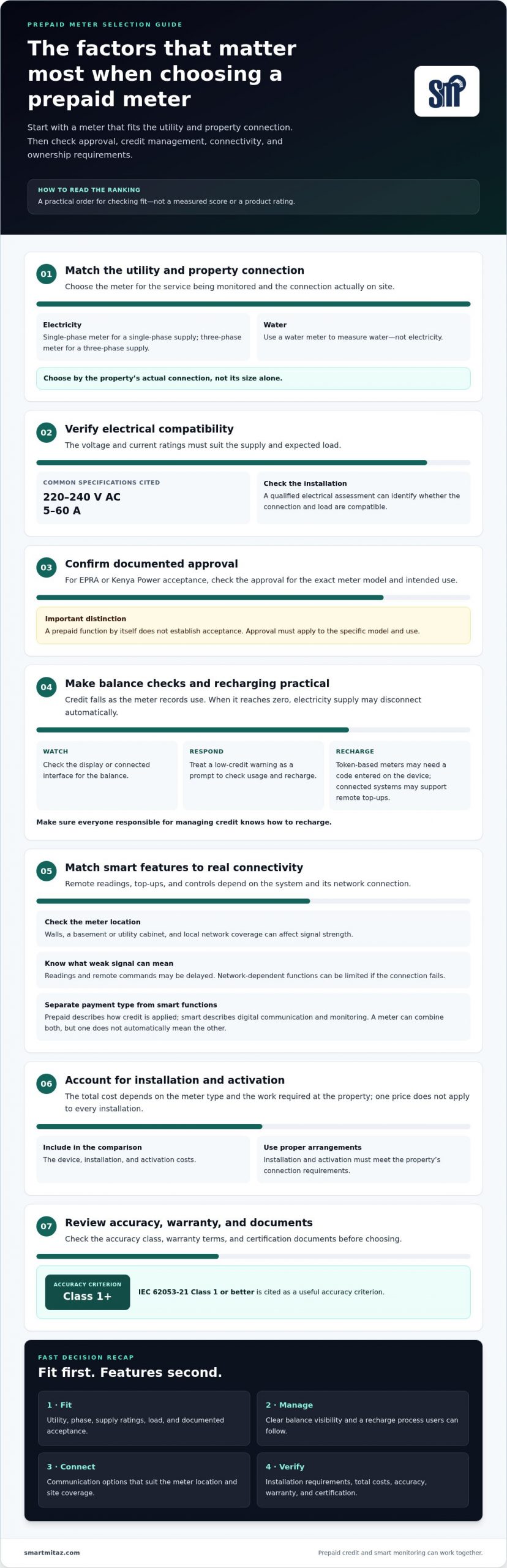
A prepaid electricity meter deducts credit as the property uses electricity. When the balance reaches zero, supply may disconnect automatically. Some meters give a low-credit warning, giving users time to recharge. Treat the warning as a prompt to check usage and top up, not just as a billing notification.
A top-up restores available credit. Token-based meters may require a code to be entered on the device, while connected systems may support remote top-ups. Check the meter display or its connected interface for the balance, and make sure everyone responsible for managing credit understands how to recharge.
Single-phase and three-phase meters suit different electricity connections. A single-phase meter is for a single-phase supply; a three-phase meter is for a three-phase supply. Choose based on the property’s actual connection, not its size alone.
Match the meter’s voltage and current ratings to the supply and expected load. For single-phase options, compare the stated rating with the property’s supply; common specifications include 220-240 V AC and 5-60 A. A qualified electrical assessment can identify whether the connection and load are compatible.
For EPRA or Kenya Power acceptance, choose a model with documented approval for the intended connection. Approval must apply to the specific meter model and use. A prepaid function by itself does not establish acceptance.
Buying a meter does not mean it should be connected without the proper arrangements. Installation and activation must meet the property’s connection requirements. smartmitaz offers professional installation services for its metering products.
When comparing meter options in Kenya, account for the device and any installation or activation costs. The total depends on the meter type and the work required at the property, so avoid assuming one price applies to every installation.
Before buying, review the accuracy class, warranty terms, and certification documents. IEC 62053-21 Class 1 or better is a useful accuracy criterion. Common issues include rejected tokens, low credit, and power outages; confirm the displayed balance and token entry before treating an outage as a meter fault.
What Is a Prepaid Meter?
A prepaid meter records electricity or other utility use against credit paid in advance. Its balance and consumption information can help households in Nairobi track usage and manage utility spending.
Monitoring Consumption and Balance
A prepaid meter measures consumption and deducts credit as electricity is used. Check the display or connected system for the balance, then compare readings over time. This can help a household notice changes, such as higher usage after adding an appliance, and review its energy use before credit runs low.
Smart electricity meters can record usage digitally and transmit readings automatically. Depending on the system, users may see real-time data or review usage records. Check the balance alongside those records to understand when consumption rises. When considering how to choose a prepaid meter, think about how much usage information the household needs.
Prepaid Meter Types and Billing Differences
Prepaid electricity meters can be designed for single-phase or three-phase connections, while prepaid meters can also measure water use. Choose according to the utility and property connection: an electricity meter measures electricity, and a water meter measures water. The device must match the service being monitored.
Prepaid and postpaid meters differ mainly in when payment is made. With prepaid, credit is paid in advance and decreases as the meter records use. With postpaid electricity, consumption is recorded first and payment follows the bill. If you are deciding how to choose a prepaid meter, consider whether paying ahead or receiving a bill later better suits your budgeting routine.
Prepaid describes how credit is applied; smart describes digital communication and monitoring functions. They can work together, but one does not automatically mean the other. Compare the payment method, utility, connection type and information needed for routine checks. These requirements help narrow the options without assuming every property needs the same features.
By showing actual usage and bills, prepaid meters can help avoid estimated billing and related overcharging or disputes. They do not reduce electricity rates, but can help users manage consumption.
Smart meter communication and remote management
Network connectivity can support some smart meter functions. For a Nairobi property, connection quality affects which remote functions work reliably.
Meter Communication
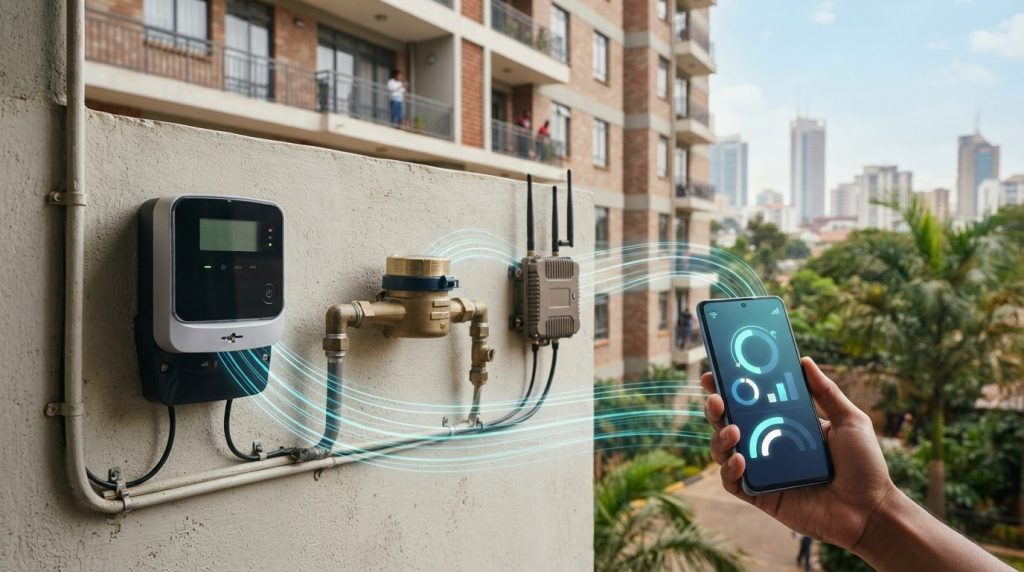
A smart meter sends readings between the meter and a connected management system over a network connection. This can let authorised users view consumption information without visiting the meter. Walls, meter location and local network coverage can all affect signal strength.
Consider a meter installed in a basement or utility cabinet. If its signal is weak, readings and remote commands may be delayed. Match the communication method to the installation location and monitoring needs. Usage information can also help property managers notice changes that deserve attention.
Remote Top-Ups and Management
Remote top-ups let users add prepaid credit through a connected system instead of entering a token at the meter. Some modern prepaid systems also offer usage analytics and mobile app integration. These options can simplify payment for a landlord managing several properties, especially when travelling between sites would otherwise be required.
A cloud-based management platform can bring meter information into a shared interface when the system supports that setup. Managers can review readings, monitor balances, and use available remote controls from a connected device. Utilities may remotely monitor meters, troubleshoot issues, and adjust settings, reducing the need for an on-site visit for those tasks.
Separate remote access from guaranteed connectivity. Smart meter functions that rely on a network can be limited if the connection fails. During planning, map each meter’s location and identify where the signal is weakest. Then choose communication suited to the site and its management needs.
Installation planning should account for the meter’s position and its communication path. A meter behind thick walls, for example, may need a different connectivity arrangement from one in an open service area. A suitable system connects payment, readings and management functions with the people who need them, while accounting for site conditions. For a quote or demonstration, use a smart meter procurement checklist to organise meter quantities, communication needs, network conditions and site constraints.
Convergence of prepaid and smart meter features
Prepaid and smart describe different meter functions, not opposing choices. Prepaid electricity tracks credit paid before use; smart functions add digital readings and communication. Some smart meters also support prepaid operation, combining credit management with consumption information. This can suit households that need both payment control and clearer usage records.
Basic prepaid electricity meters may provide limited monitoring, while connected smart models can offer more detailed readings. Depending on the system, users may view consumption remotely, receive alerts or access records through a connected interface. Digital readings can help a property manager compare usage over time and notice changes related to appliances or occupancy.
Remote recharge is another possible combined feature. Instead of entering a token at the meter, a supported system may let users top up remotely. Some models also provide usage analytics or mobile app integration. These functions depend on the meter and its communication setup, so consider which tasks matter most: checking credit, reviewing consumption, or managing several properties.
Some smart meters support time-of-use tariffs or dynamic pricing, where rates vary by usage period. This is useful only when the tariff arrangement and household routine make it relevant. A household able to shift appliance use to lower-rate periods may value time-based information more than one focused on straightforward credit tracking.
Make the decision by separating essential functions from optional ones. First, identify whether you need prepaid credit control. Then consider whether remote meter readings, mobile access, analytics, or time-based tariffs improve your energy management. A combined meter suits properties that need both payment visibility and connected monitoring; a simpler prepaid option may fit where those smart functions have little practical value.
Smart meters are typically used in postpaid systems, although some models also support prepaid functionality. The overlap is model-specific rather than something to assume from the smart label alone. When comparing options, verify that the particular meter supports the payment arrangement required instead of treating smart features and prepaid credit as a guaranteed package. This distinction keeps the choice focused on the functions needed for the property.
Smartmitaz: Outdoor 4G-LoRa water meter gateway
smartmitaz’s Outdoor 4G-LoRa water meter gateway is relevant for properties considering connected water-meter management. Match the gateway to a water-meter setup where outdoor placement and communication are part of the system requirements. It complements the meter choice; it does not replace selecting the correct meter for the utility and property.
For electricity, smartmitaz offers Single Phase Smart Prepayment Meter and Three Phase Smart Prepayment Meter options. For water, its Residential Smart Prepayment Water Meter provides a prepaid meter option. Choose according to the utility being measured and the property’s supply arrangement. The gateway is specifically for water-meter systems, while the prepaid meters address the metering function.
If your priority is remote water-meter communication, consider the gateway alongside the relevant meter. For prepaid electricity, focus on the matching phase option. Contact smartmitaz to discuss its metering products.
Move Your Meter Decision Forward
Choose for the property’s actual requirements, not features that add complexity without a clear purpose. To decide how to choose a prepaid meter, identify who will manage it, what information they need and whether remote access would help. Keep the decision tied to the utility being measured and the site’s connection needs.
For electricity metering, smartmitaz offers Single Phase Smart Prepayment Meter and Three Phase Smart Prepayment Meter options. For water-meter communication, it offers an Outdoor 4G-LoRa water meter gateway. These are distinct products for different metering requirements, so match the product category to the property’s need.
Make the next step a practical product discussion with Smart Mitaz. Share whether you need electricity or water metering and what you want to manage remotely. That provides a clear starting point for choosing among its smart prepaid meters and water-meter products.
Contact smartmitaz about prepaid meters to discuss the options for your property and move your metering decision forward.
Frequently Asked Questions
What are the benefits of Prepaid Energy?
Prepaid energy can help households plan payments and assign responsibility for top-ups. In a shared Nairobi rental, for example, agreeing who purchases credit can prevent confusion between tenants and the property manager. Keep transaction records with household expense notes to track spending patterns. This can help households keep track of spending, but prepaid energy does not necessarily mean lower bills.
[…] Match the meter to its circuit, intended use and monitoring needs. Compare model specifications before choosing a unit for a property in Kenya. For prepaid options, see this guide on how to choose a prepaid meter for remote management. […]
[…] vary in how users load credit and monitor electricity use. Compare the loading method, display, and remote-monitoring needs before choosing a […]