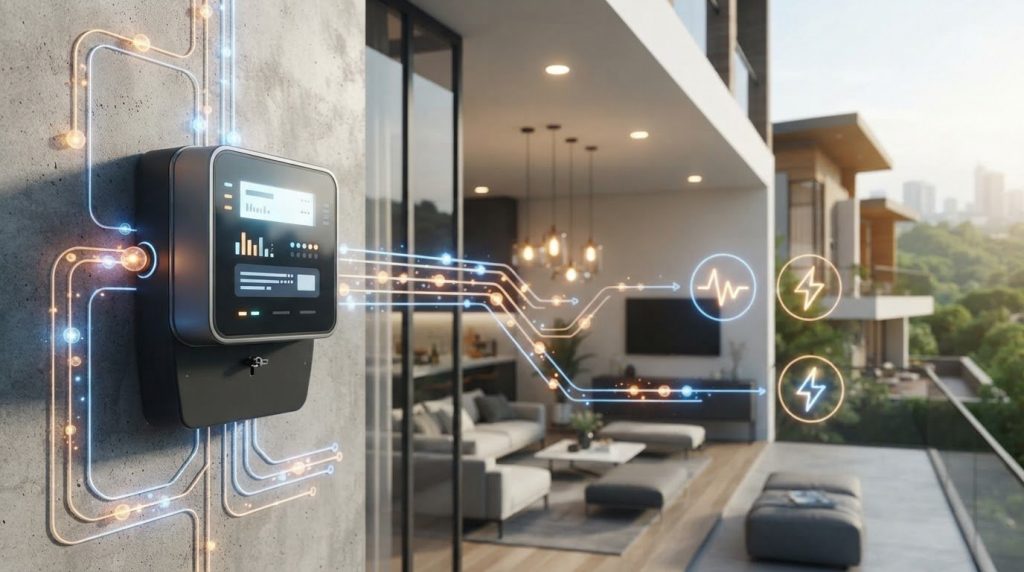
How Prepaid Smart Meters Work: Credit, Consumption and Supply
A prepaid smart meter tracks electricity use against credit added in advance. Understanding how prepaid smart meters work means separating two functions: prepayment determines how credit is added and used, while smart features support the measurement, recording or communication of meter data.
You should be able to follow the link between the amount loaded, the electricity used and the balance shown on the meter. It can be less obvious why a balance changes or what happens when it reaches zero. This guide explains the operating sequence, how to interpret consumption readings and what to consider when credit runs low. Supply behavior depends on the meter configuration and the utility arrangement.
You’ll also learn how smart communication differs from prepayment, so you can interpret balance and usage information more confidently. Smartmitaz sells single-phase, three-phase and DIN-rail single-phase smart prepayment electricity meters for customers exploring metering hardware.
Key Takeaways
- Follow the steps from adding credit to measuring electricity use and updating the balance to understand how prepaid smart meters work.
- Distinguish available credit from cumulative electricity consumption. Each reading describes a different part of the metering arrangement.
- Check display labels and units before interpreting a reading, since screens and update frequency vary by meter model.
- A low balance does not automatically mean the meter has a fault. The response at zero credit depends on the meter and system configuration.
- Separate local payment procedures from meter functions, and compare single-phase, three-phase and DIN-rail electricity meter options.
What Is a Prepaid Smart Meter, and What Does ‘Smart’ Mean?
A prepaid smart meter combines two distinct functions. Prepaid describes when electricity is paid for: credit is added before use. Smart describes digital capabilities for measuring, recording or handling meter information. The meter measures the electricity supplied to a property, while the prepaid arrangement applies available credit to that use.
The terms are not interchangeable. A prepaid meter does not necessarily have the same digital functions as a smart model, and smart-meter capabilities do not determine whether billing is prepaid or postpaid. Keeping the two ideas separate makes it easier to understand how prepaid smart meters work and what a particular display or communication feature can tell you.
How is a prepaid electricity meter different from a postpaid meter?
The difference is the timing of payment, not whether electricity use is measured. With a prepaid arrangement, a household makes credit available in advance, and electricity use is accounted for against it. With postpaid billing, the meter records consumption first and the household receives a bill after a consumption period.
For example, one household might add credit before using its usual appliances. A household on postpaid billing could use the same appliances and review the recorded consumption on a later bill. In both cases, the meter measures electricity. The payment sequence is what differs.
With prepayment, the remaining credit matters during use, but that alone does not explain how a top-up reaches the meter. The method for adding credit and how the meter recognizes it depend on the metering and vending arrangement. Since these details vary by model and system, do not assume every prepaid meter accepts credit in the same way.
What makes a prepaid meter a smart meter?
A smart meter uses digital measurement and information handling to record consumption and make meter data available in a usable form. Some models can also communicate information beyond the meter, but communication features vary. The word “smart” does not mean every meter supports remote readings, remote top-ups or a particular app. The What is a Smart Meter? overview provides background on the broader meter category.
Think of the functions as separate layers. Measurement captures electricity use. Prepayment links that use to credit added in advance. Smart capabilities may support how readings or other meter information are processed or transmitted. The meter model and the system it operates within determine which capabilities are available and how information reaches the user or utility.
This distinction is useful when comparing meter categories or interpreting a display. A balance relates to the prepaid account, while a consumption reading relates to electricity measured over time. Smart features can support information handling, but they do not change the basic meaning of those readings. Single-phase, three-phase and DIN-rail single-phase smart prepayment meters are hardware categories. Their names alone do not specify how credit is entered or data is communicated.
How Prepaid Smart Meters Work: From Adding Credit to Using Electricity
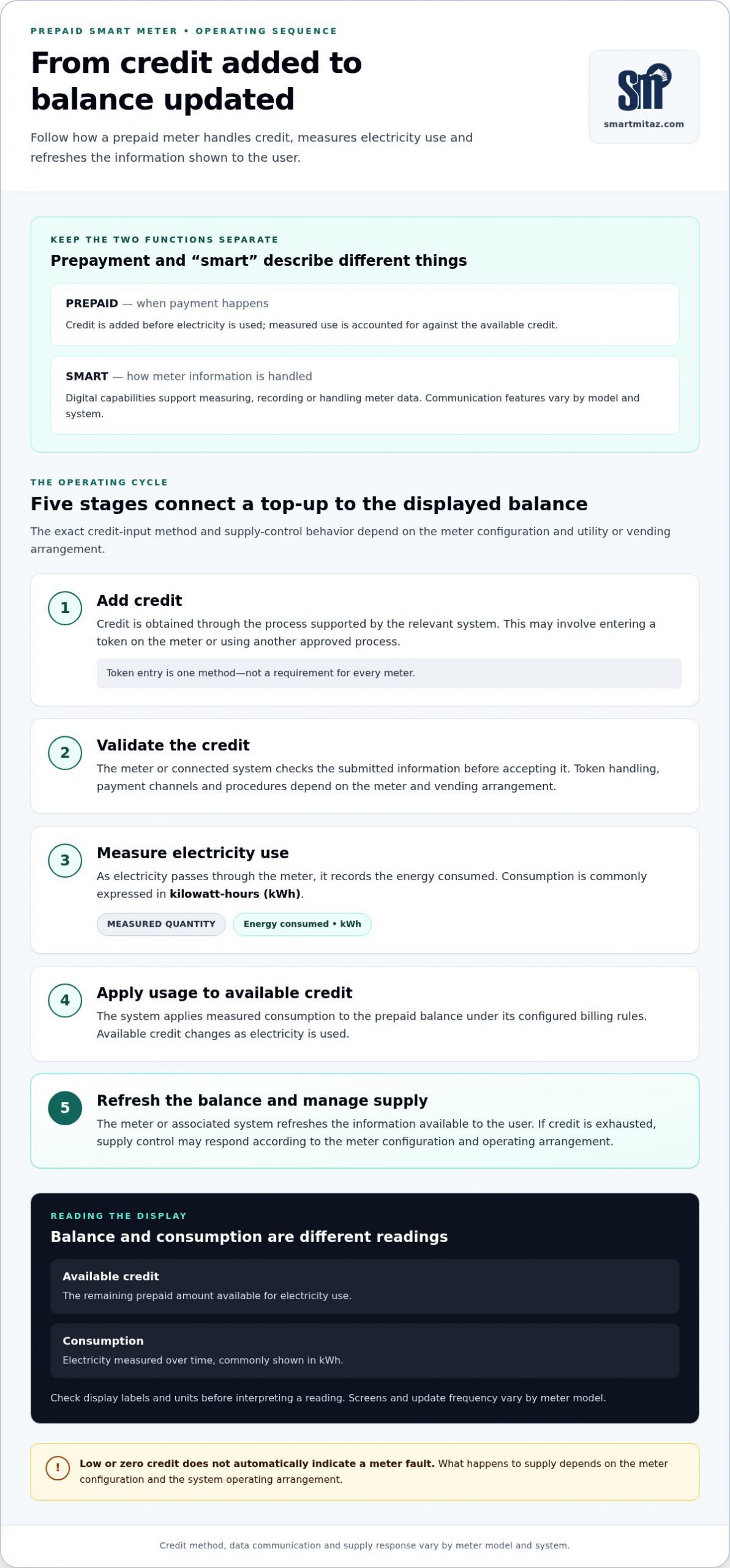
The operating cycle connects a credit-loading method with electricity measurement and balance management. In general, a prepaid meter receives credit through an approved process, checks the information, measures electricity use, applies that use against available credit and updates the balance shown. The exact input method and supply-control behavior depend on the meter configuration and the utility or vending system.
- Add credit. The user obtains credit through the method supported by the relevant system. This could mean entering a token on the meter or using another approved process. Token entry is one method, not a requirement for every meter.
- Validate the credit. The meter or connected system checks the submitted information before accepting it. A token must be handled according to the rules for that meter and vending arrangement. Payment channels and token procedures vary by utility and system.
- Measure electricity use. As electricity passes through the meter, the meter records the energy consumed. Consumption is commonly expressed in kilowatt-hours (kWh).
- Deduct usage from available credit. The system applies measured consumption to the prepaid balance under its configured billing rules. The available credit changes as electricity is used.
- Update the balance and manage supply. The meter or associated system refreshes the information available to the user. If credit is exhausted, supply control may respond according to the meter configuration and operating arrangement.
How does a top-up or token add credit?
A top-up makes additional credit available to the meter. In a token-based arrangement, the user enters the issued token using the method provided for that meter. Other systems may transfer or register credit differently. A payment and the meter’s recognition of credit are related but separate steps, and the exact channel and handling depend on the system. Do not assume every meter uses the same token process.
How does the meter deduct credit as electricity is used?
A kilowatt-hour measures energy, not how quickly electricity is being used. For example, the meter can record a household’s appliance use over time as a growing kWh total. The prepaid system then applies that measured consumption to the available balance. The remaining credit is not a consumption reading, and the displayed balance may also reflect the system’s billing rules.
Smart metering technology continues to develop, but communication options vary by model and setup. IEEE’s overview of The Future of Smart Meter Technology offers broader context on smart-meter developments. For readers comparing electricity meter categories, single-phase and three-phase smart prepayment meters provide examples alongside DIN-rail single-phase options.
What Happens When Prepaid Meter Credit Runs Low or Reaches Zero?
A low-credit message usually means the remaining balance has reached a warning point set for that meter or system. It is not automatically a sign of a fault. Treat it as a prompt to read the display, note the balance and follow the applicable utility instructions for adding credit.
Warning methods vary. A meter may show a message, symbol or balance change on its display, while some systems may use other alert methods. Do not assume every model sends an SMS, app notification or remote warning. The display and the meter’s instructions are the most direct references for understanding a warning on your setup.
How should users interpret a low-credit warning?
Read the warning alongside the available-credit value instead of treating it as a standalone diagnosis. A low balance indicates that credit is approaching a configured threshold. The threshold and alert behavior depend on the meter and its configuration. Check the displayed balance and the instructions provided for the utility or metering system. If you have made a top-up, follow the system’s stated credit-entry process rather than assuming every payment appears in the same way.
For practical monitoring, note the balance when the warning appears, then check it again after typical household use. This helps you see whether the balance is changing. The rate at which credit is used depends on electricity consumption and the applicable system rules, so a warning alone cannot identify which appliance or activity is responsible.
What can happen when credit is exhausted?
Some prepaid arrangements configure the meter to interrupt supply when available credit is depleted. This is common, but not universal. The response depends on the meter configuration and operating arrangement. Grace functions or other low-credit provisions can also vary, so use the instructions for the specific system rather than assuming another meter behaves the same way.
If the balance reaches zero and supply stops, the interruption may be consistent with the prepaid setting rather than a technical failure. Follow the approved process to add valid credit, then allow the meter to register it as instructed. Restoration depends on the credit being accepted and the meter operating as configured. If the system reports an error, do not repeatedly enter the same information. Follow the relevant utility guidance for the next step.
A zero balance is only one possible explanation for an interruption. A meter fault or wider supply outage can produce a similar result, so compare the meter display with the balance and any system messages. If credit remains but electricity is unavailable, a top-up may not address the problem. Follow utility guidance for reporting supply or meter issues.
Understanding how prepaid smart meters work helps distinguish a balance-related interruption from a possible fault. Check the balance, note any displayed message and follow the procedures for that meter system. Warning thresholds, alert channels and supply-control behavior depend on the configuration, so the meter’s own instructions are essential for interpreting low or exhausted credit.
How to Read Meter Balance, Consumption and Usage Information
A meter display can show several kinds of information. Start by separating prepaid credit from measured electricity use. The readings are related, but they do not represent the same quantity. Labels, units, screen sequence and update frequency vary by model, so use the meter’s display and instructions to identify each reading.
Which readings help explain remaining credit and electricity use?
Remaining credit is the prepaid value available for use, if the meter displays it. Consumption is measured energy, commonly shown in kilowatt-hours (kWh). Other usage information may summarize consumption over a period or show another type of reading. Check the screen label and meter instructions before interpreting a figure.
| Reading type | What it tells you | How to use it |
|---|---|---|
| Available credit | Prepaid value remaining, if displayed | Track how much credit is left under the meter’s system |
| Cumulative consumption | Energy measured over time, often in kWh | Compare readings taken at different times to see the change |
| Displayed usage information | A usage figure or summary, if provided | Check its label, unit and period before comparing it with other readings |
Read each figure with its unit and label. A balance shown as a monetary value differs from a kWh consumption total, even if both change as electricity is used. Some meters cycle through screens or use abbreviated labels. Record the screen name along with the number so you do not later mistake a balance for an energy reading.
Why can balance and consumption figures appear different?
Credit represents prepaid value, while kWh represents energy. The meter’s applicable rates and other configured deductions affect how consumption relates to the changing balance. There is no single calculation or update interval for every system. The meter records energy, while the utility or metering arrangement determines how charges and credit are applied.
To spot patterns, note the consumption reading at a consistent time, then compare it with a later reading. In a household, this can help show whether energy use rose during a period of heavier appliance use. Nairobi property managers can use consistent readings in their records to identify changes in usage over time. Treat comparisons as indicators, not a diagnosis. Occupancy, equipment use and reading periods can differ.
Keep a simple log with the date, screen label, unit and value. If a figure seems unchanged or unexpected, check the display again and consult the meter’s instructions before drawing conclusions. This makes how prepaid smart meters work easier to follow without assuming that every model changes tariffs or displays the same information.
Explore smart prepayment electricity meters as hardware options for metering needs.
Prepaid Smart Meter Operation in Kenya and the Hardware Options
The basic prepaid sequence is consistent: credit is made available to the meter, electricity use is measured, and the system applies consumption to the prepaid balance. Local details differ. Payment channels, token rules, account procedures and applicable tariffs depend on the utility and metering system. A meter measures and manages information; it does not set the tariff or supply electricity.
For households and property managers in Nairobi, keeping these roles separate helps prevent confusion. The meter’s operating principle explains how credit and consumption relate. Current utility guidance explains local steps for making payments, handling tokens and managing an account.
What should Kenyan users know about local top-up arrangements?
Use current official utility guidance for Kenya-specific payment and account procedures. If your account is with Kenya Power, follow its current instructions for the relevant process. Do not assume that a token format, payment channel or account step in one metering arrangement applies to another. Procedures can change, so rely on current utility information rather than general descriptions of prepaid meters.
Keep the roles clear: the utility’s instructions govern payment and account procedures, while the meter records consumption and operates according to its configuration. For token standards or regulatory details, use current authoritative information before relying on a specific claim. Smartmitaz sells metering hardware, not electricity or utility top-ups.
Which prepaid electricity meter form factors does smartmitaz offer?
Smartmitaz sells electricity metering hardware in single-phase and three-phase categories. The range includes the Single Phase Smart Prepayment Meter and Three Phase Smart Prepayment Meter. It also includes a DIN rail Single Phase Smart Prepayment Meter as a separate form factor. These category names identify the hardware type. They do not specify payment channels, token procedures or utility account arrangements.
Use the intended electrical setup and mounting format as practical starting points when exploring meter hardware. Keep local utility requirements separate from the meter category, and do not assume that two meters use identical credit-entry or communication processes. This distinction makes the principles behind how prepaid smart meters work easier to apply without confusing hardware selection with a utility service or payment method.
Explore Smartmitaz’s prepaid electricity meter hardware to compare single-phase, three-phase and DIN-rail options for your metering requirements.
Turn Meter Knowledge into a Clear Next Step
Use your understanding of how prepaid smart meters work to define what the property needs before comparing hardware. Note the site’s electrical setup, the intended meter location and mounting format, and the utility procedures that apply to the account. These are separate considerations. Choosing hardware for a property does not replace following local payment or account guidance.
For Nairobi-based projects, Smartmitaz sells electricity meter hardware in single-phase, three-phase and DIN-rail formats. Start with the intended application, then compare the relevant meter category and form factor. Keep a separate record of local utility instructions so payment and account procedures remain clear during planning.
A short requirements list can make the next decision more focused. Record what the site requires, which format suits the planned setup and which utility procedures govern the account. Then explore Smartmitaz prepaid smart meter options to assess the available hardware.
Frequently Asked Questions
How do prepaid smart meters work?
Prepaid smart meters accept credit through the assigned system, record electricity use and reduce available credit as consumption is accounted for. Depending on the configuration, the meter may control supply when credit runs out. To understand your meter, compare its display before and after a recognized top-up, then check it again after typical use. Payment channels and display functions vary between systems.
Do prepaid smart meters need an internet connection?
No, internet access is not a universal requirement for prepaid metering. Some systems use locally entered tokens or other local credit methods, while connected smart-meter arrangements may communicate through other networks. A meter’s local operation and its ability to send information elsewhere are separate considerations. The setup depends on the meter and utility arrangement, so do not assume a particular connection type from the word “smart.”
What happens when a prepaid electricity meter runs out of credit?
A configured meter may interrupt supply when available credit is exhausted. Follow the meter instructions and relevant utility guidance to add valid credit, then allow the system to process it as directed. If power remains off, check the meter’s displayed status and consider whether the issue may be a fault or wider outage rather than a zero balance. In Nairobi, follow the current procedures for your utility account.
Can a prepaid smart meter be topped up remotely?
Some smart-meter arrangements support remote credit updates, while others require users to enter a token or credit at the meter. The method depends on the meter, utility and payment system. Follow the instructions for the specific setup before relying on a remote top-up. A meter’s smart capabilities do not by themselves mean it accepts credit remotely or uses a particular payment channel.
Is a prepaid smart meter different from a postpaid meter?
Yes. The payment timing differs: prepaid users make credit available before use, while postpaid users are billed after a usage period. Both arrangements measure electricity consumption. “Smart” refers to digital measurement or information handling, not payment timing. Two properties could have meters that record electricity use but follow different payment arrangements, so consider the meter’s digital features and billing method separately.
How does a prepaid meter calculate electricity consumption?
A prepaid meter measures electrical energy used over time, commonly recorded in kilowatt-hours (kWh). A kilowatt-hour measures energy; a kilowatt (kW) describes power. The credit balance then changes according to the system’s applicable rates and deductions. To compare readings, record the same consumption screen at two different times and note its unit. Do not assume every meter uses the same labels, display format or billing calculation.
Why is my prepaid meter balance reducing faster than expected?
A faster-than-expected decrease may relate to electricity use, applicable rates or deductions, and the time since your last top-up. Record the balance and consumption reading at a consistent time, then compare them over a similar period. Note changes in appliance use or occupancy as context, but do not assume they explain the difference. If the readings remain unclear, follow your utility’s established support process.